 CostBeaver
What Is a Heat Pump? How It Works — and Whether It's Right for You
 HVAC GUIDE
A heat pump is a single system that both heats and cools your home by moving heat instead of burning fuel to make it. In summer it pulls heat out of your house like a regular AC; in winter it runs backward and pulls heat from the outside air into the house. In a mild climate like Georgia and the Carolinas, that makes it the most efficient way to stay comfortable year-round, and for most homes here it's now the default replacement, not the alternative.
The short version
- A heat pump replaces both your AC and your furnace with one system — same box cools in summer, heats in winter.
- It doesn't make heat, it moves it, which is why it can deliver 2–4 units of heat per unit of electricity. That's the efficiency story.
- Installed in the Southeast, a standard air-source system runs roughly $5,500–$12,000 in 2026; a single-room ductless mini-split is about $3,500–$7,000.
- Our short, mild winters are exactly where heat pumps shine. The cold-weather worries you read about mostly apply up north, not here.
So what is a heat pump, actually?
Forget the name for a second. A heat pump is just one outdoor unit that does the job of two: it cools the house in summer and heats it in winter. No gas furnace, no separate AC. One system, both seasons.
The trick is that it never burns anything to make heat. It moves heat that already exists from one place to another. Summer: it grabs the heat inside your house and dumps it outside. Winter: it flips, pulls heat out of the outdoor air, and brings it in. Yes, even chilly air has heat in it worth moving.
Your central air conditioner is a heat pump that only knows how to run one direction. It takes heat out of your house and throws it outside. A true heat pump adds a reversing valve so it can also run the other way and heat the place. That's the whole difference. If you understand your AC, you already understand the hard part.
How a heat pump actually works
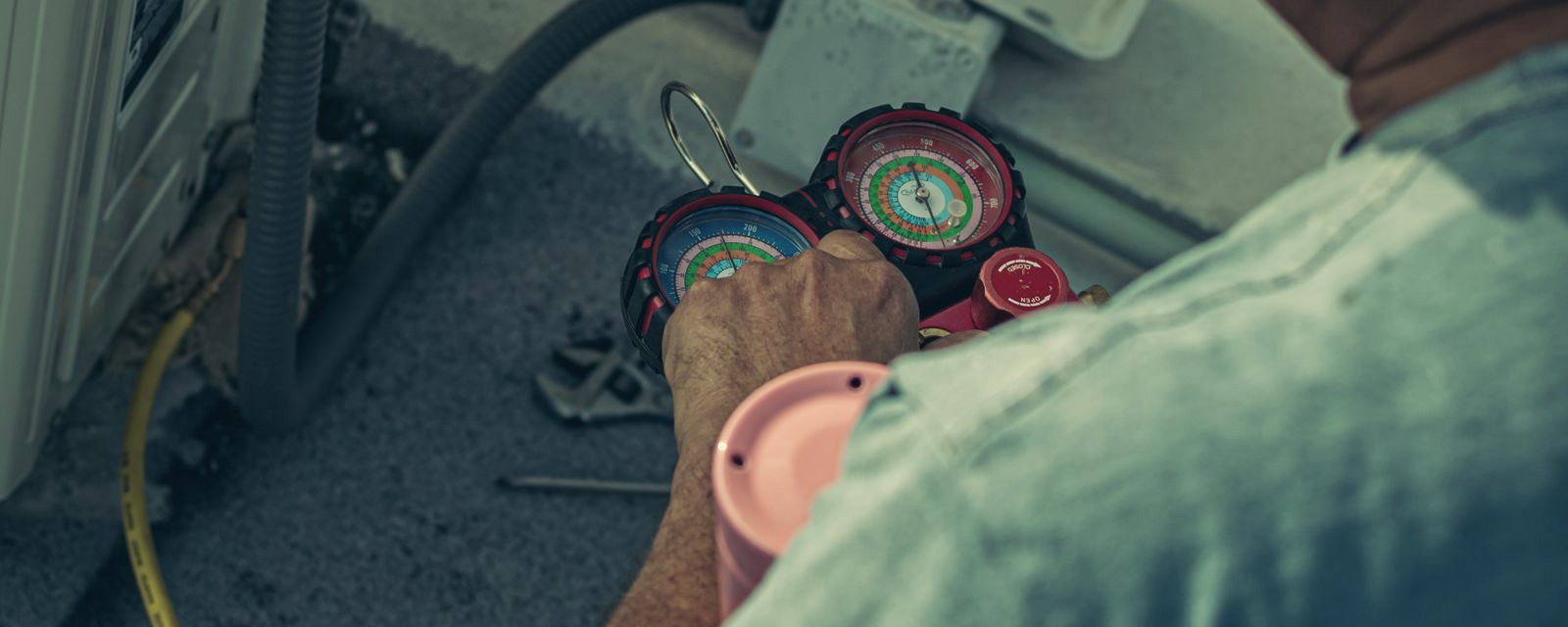
Down at the parts level, a refrigerant does the carrying. It's a fluid that soaks up heat when it evaporates and lets go of heat when it condenses, and the system pushes it in a loop between an indoor coil and the outdoor unit.
A little component called the reversing valve decides which coil is grabbing heat and which one is releasing it. Flip the valve and the same hardware that cooled you in July is heating you in January. Everything else, the compressor, the coils, the fan, is doing what your AC already does.
Efficiency is where it gets interesting. A gas furnace is, at its absolute best, 98% efficient. It can never give you more heat than the fuel it burns. A heat pump isn't bound by that, because it's moving heat, not making it. Move 3 units of heat for every 1 unit of electricity and you're effectively 300% efficient. That number has a name on the label: HSPF2 for heating, SEER2 for cooling.
The three types you'll actually get quoted
"Heat pump" covers a few different setups. These are the ones a Southeast installer will put in front of you.
| Type | What it is | Ballpark installed cost |
|---|---|---|
| Air-source, ducted | The standard whole-home system that uses your existing ductwork | $5,500–$12,000 |
| Ductless mini-split | Wall units, no ducts — great for additions, garages, or old homes | $3,500–$7,000 per zone |
| Geothermal (ground-source) | Uses stable underground temps; most efficient, most expensive | $18,000–$45,000 |
For most homes here, it's the ducted air-source system. Mini-splits win when there's no ductwork or you're only conditioning a room or two. Geothermal is a long-game investment that rarely pencils out for an average home. See our AC vs. heat pump breakdown for the cooling-only comparison.
Why the Southeast is heat-pump country
Here's the honest opinion, and installers around here will tell you the same thing: in Georgia and the Carolinas, if your system is dying, a heat pump is usually the right call.
Two reasons. First, our winters are short and mild. The scary stories about heat pumps struggling in deep cold are real, but they're about Minnesota, not Macon. A modern unit handles a Piedmont or Lowcountry winter without breaking a sweat. Second, the cooling season is enormous. We run the AC from May into September, and a heat pump is a high-efficiency AC the rest of the year. You're buying the efficiency you'll use for five months straight.
The federal 25C tax credit that paid up to $2,000 toward a heat pump expired for installs after December 31, 2025. In 2026 the savings come from your utility instead: Georgia Power runs a heat-pump rebate, and Duke Energy and Dominion have their own programs. Get the utility right for your address — Duke serves Greenville, Dominion serves Columbia. Full story in our 2026 credit update.
What a heat pump costs in 2026
Price tracks size (tonnage), efficiency tier, and whether your ducts are in good shape. Rough Southeast numbers, installed:
| System | Typical installed cost | Best for |
|---|---|---|
| Ductless mini-split (1 zone) | $3,500–$7,000 | A room, addition, or garage |
| 2-ton air-source (small home) | $5,500–$8,500 | ~1,300 sq ft |
| 3-ton air-source (typical home) | $7,500–$11,000 | ~2,000 sq ft |
| High-efficiency + duct repair | $11,000–$15,000+ | Bigger or leaky-duct homes |
Those are ballparks, not quotes. Get your own number by home size and system type on the HVAC calculator — no email, no phone, no sales call. Not sure what size you need? The sizing guide starts you at about 1 ton per 650 sq ft.
The honest downsides
No system is free of trade-offs, and a good neighbor tells you the annoying parts too.
The air from the vents feels cooler in heating mode than a gas furnace's blast. It's not broken, that's just how a heat pump heats, in a steady stream rather than a hot burst, but it surprises people the first winter. On the coldest nights the system leans on backup electric strip heat, which is where your power bill can spike if the unit is undersized or old. And the upfront cost is real: you're buying heating and cooling in one shot, so the sticker looks bigger than an AC-only swap even though you're replacing two things.
One more, specific to us: on the coast, from Charleston to Savannah, salt air corrodes outdoor units faster. If you're near the water, ask about a coastal-rated or coated unit and plan for a shorter lifespan.
Is a heat pump right for you?
Quick gut check. A heat pump is very likely your move if your AC and furnace are both aging, you want lower summer bills, or you're in an all-electric home with no gas line. It's a closer call if you have brand-new gas heat you're happy with, or you live somewhere with genuinely brutal winters, which isn't most of this region.
If your current system is limping, don't wait for the July breakdown to decide. Read the repair-vs-replace guide, then get a real local number on the calculator before anyone has your phone number.