 CostBeaver
AC Running but Not Cooling? Work Through This Before You Panic
 HVAC TIPS
When the AC runs but the house won't cool, check things in this order: thermostat settings, then the filter, then the breakers, then whether the outdoor unit is actually running, then ice on the refrigerant lines, then a dirty condenser coil. That sequence catches the most common causes — a clogged filter is number one — in about ten minutes, no tools. What's left after that, mainly a failed capacitor or low refrigerant, is licensed-tech territory: expect a $75–$150 service call plus the repair.
The short version
- Here's the honest stat from the field: 8 out of 10 July "my AC died" calls turn out to be a $15 filter or a $250 capacitor. Run the checklist before you panic-buy a system.
- Order matters: thermostat → filter → breaker → outdoor unit → ice check → condenser rinse. Each step rules out the next.
- Ice on the copper lines means stop: switch cooling off, run the fan, and let it thaw 2–4 hours. Running a frozen system grinds the compressor toward a $2,000+ failure.
- Capacitors and refrigerant are tech work — $150–$400 for a capacitor swap, and refrigerant handling legally requires an EPA-certified pro.
Before you call anyone, read this
Every July the same scene plays out across metro Atlanta and Charlotte: it's 96°F at 5 p.m., the vents are blowing but the house is stuck at 79, and somebody is already Googling emergency HVAC replacement from the kitchen floor. Take a breath. Here's the opinion this whole page hangs on: eight out of ten of those "the AC died" calls end with a $15 filter or a $250 capacitor, not a new system. The trick is checking things in the right order, because each step rules out the ones after it.
Ten minutes. No tools beyond a flashlight and a garden hose. Start upstairs at the thermostat and work your way out to the yard.
Step 1: the thermostat (30 seconds, zero pride lost)
Nobody wants this to be the answer, which is exactly why it so often is. Three things to look at.
First, the mode. Someone brushed the switch to HEAT or OFF more often than anyone admits. Second, the fan setting: on ON, the blower runs nonstop and pushes room-temperature air between cooling cycles, which feels exactly like an AC that quit cooling. Flip it to AUTO. Third, batteries — a thermostat running on dying AAs can drop its call for cooling entirely while the screen still glows. Two fresh batteries have ended a lot of emergency service calls.
Step 2: the filter, the number-one cause in the Southeast
A clogged filter is the single most common reason an AC stops cooling, and our region manufactures clogged filters at an industrial pace. Spring buries the Piedmont in pine pollen, then the system runs nearly nonstop from May to late September pulling air through that same square of pleated paper. By August it's a felt blanket.
Here's what a choked filter actually does: it starves the indoor coil of airflow, the coil gets too cold, and it starts icing over — which chokes airflow further. The house gets warmer while the system runs harder. Pull the filter, hold it to a light, and if you can't see through it, swap it. $10–$25 at any hardware store. Then give the system an hour before judging the result, because a coil that started icing needs time to recover.
One Southeast-specific gotcha hides in the drain pan. In Charlotte and Columbia humidity, the condensate drain line grows algae, clogs, and backs up — and a safety float switch then shuts the whole system down before water hits your ceiling. The AC goes silent and everyone assumes catastrophe. If your system won't run at all and the drain pan under the air handler has standing water, that's your culprit. Clearing the line and pouring a cup of white vinegar down it each season keeps it from coming back — same two-minute chore we cover in the heat pump maintenance guide.
Step 3: breakers, and the switch everyone forgets
Air conditioning usually rides on two breakers, one for the outdoor condenser and one for the indoor air handler. If either tripped, the other half keeps running — which is how you get a blower pushing warm air while the outdoor unit sits dead. Check the panel, and check the gray metal disconnect box mounted on the wall next to the outdoor unit, because landscapers and curious kids have both been known to pull it.
One rule: reset a tripped breaker once. If it trips again, stop. A breaker that keeps tripping is protecting you from a real electrical fault, likely a failing compressor or a shorted wire, and that's a tech visit, not a third reset.
Step 4: go stand next to the outdoor unit
Walk outside and listen. Three sounds, three diagnoses.
- Fan spinning, air blowing warm off the top. The unit is working; move to the ice and coil checks below.
- Humming or clicking, fan not spinning. Classic failed capacitor — the part that gives the motors their starting kick. It's a $10–$60 part, a $150–$400 repair with the service call, and one of the most common failures in our heat. It is not a DIY job: capacitors hold a stored charge that can bite hard even with the power off.
- Dead silence. Back to the breakers and disconnect, or the float switch above.
Capacitors die young down here for a reason — they cook. Sitting in a metal box through a 100-degree Upstate afternoon, absorbing startup surge after startup surge, five summers is a full career for a cheap one.
Step 5: ice where ice should never be
Now peek at the copper lines running into the outdoor unit, and at the indoor coil if your air handler has an access panel. Frost or a sleeve of ice on a 95°F day looks impossible, but it's one of the most common no-cool findings, and it means one of two things: airflow so weak the coil overchilled (that filter again, or a failing blower), or low refrigerant from a leak.
Either way the first move is the same. Cooling OFF, fan ON, let it thaw. Give it 2–4 hours, sometimes up to a full day for a badly iced coil, with towels around the air handler for the meltwater. Do not run it frozen and do not chip at the ice — the coil fins bend if you look at them wrong, and a compressor pumping liquid refrigerant is how a $250 problem becomes a $2,500 one.
After the thaw, run it with the fresh filter. Cools fine and stays ice-free? It was airflow, and you just fixed it. Ices up again within a day or two? That's refrigerant, and it's tech time.
Step 6: rinse the condenser coil
Last free fix. The outdoor coil dumps your house's heat into the yard, and it can't do that through a mat of grass clippings, cottonwood fluff, and red-clay dust — a coating every Southern condenser wears by late summer, especially the ones catching the mower's discharge side every Saturday.
Kill the power at the disconnect first. Then hose the fins gently from the top down, low pressure, no pressure washer ever. Five minutes, and a genuinely caked coil can give you back a noticeable chunk of cooling capacity. While you're there, cut back any shrubs inside about two feet — the unit needs room to breathe.
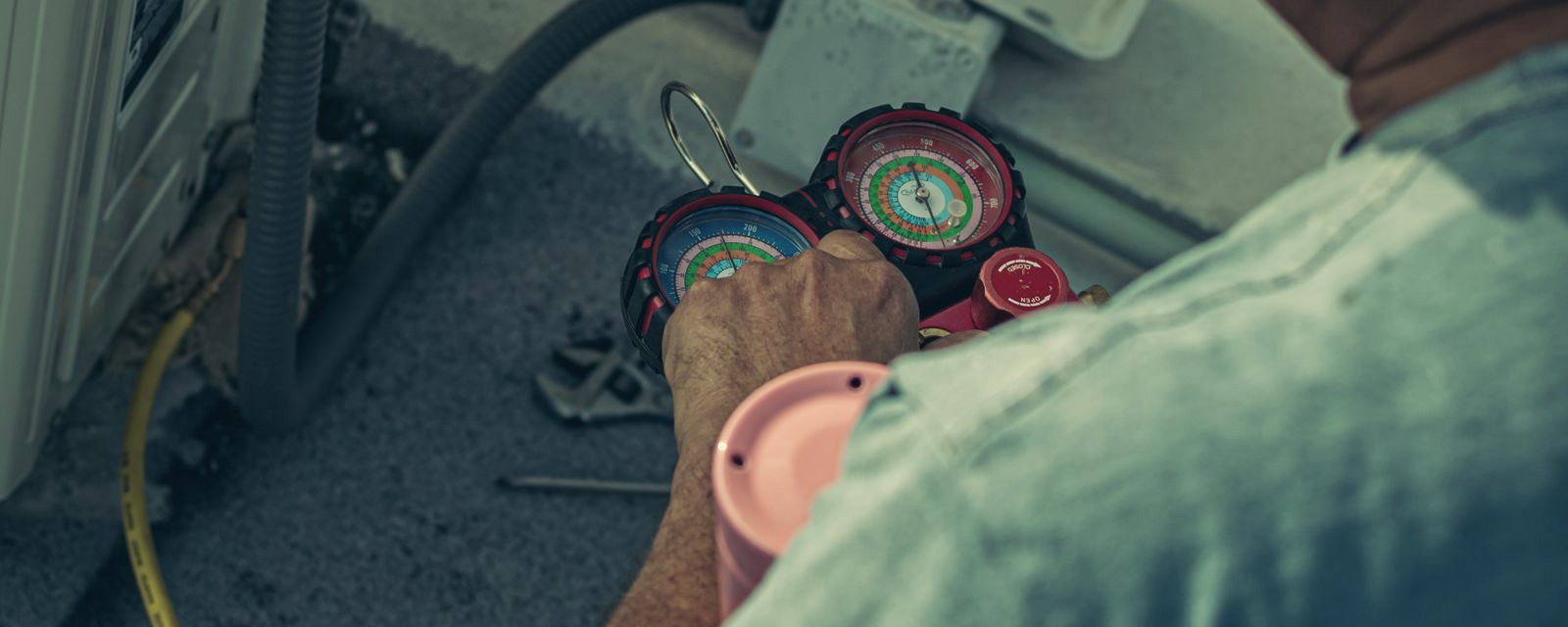
The auto-parts store sells recharge kits, and the internet will cheerfully show you how to use one. Don't. Refrigerant handling legally requires EPA Section 608 certification, the DIY gauges lie, and refrigerant does not get used up — if it's low, it leaked, and topping it off without fixing the leak just meters the same failure out over another season. A proper leak search, repair, and recharge runs roughly $500–$1,500 depending on where the leak hides. Real money, but it buys an actual fix.
What the pro repairs cost in 2026
If the checklist didn't solve it, here's what you're likely walking into, at Southeast rates:
| Repair | Typical 2026 cost | Who does it |
|---|---|---|
| Diagnostic / service call | $75–$150 | Tech; often credited toward the repair |
| New filter | $10–$25 | You, today |
| Capacitor replacement | $150–$400 | Tech — stored charge, not DIY |
| Condensate line clear + treatment | $100–$250 | Tech, or DIY with a wet/dry vac |
| Refrigerant leak repair + recharge | $500–$1,500 | EPA-certified tech only |
| Blower motor | $450–$1,200 | Tech |
One negotiating note: most outfits around here credit the diagnostic fee toward the repair if you say yes on the spot. Ask before they roll the truck.
When it's not a repair anymore
Sometimes the checklist and the tech visit both point the same direction: the system is done. The pattern is hard to miss — a unit past 12–15 years old, a second or third no-cool summer in a row, and a repair quote with a comma in it. The quick math we use: multiply the repair cost by the system's age in years, and if it clears $5,000, put the money toward replacement instead. A $700 repair on a 4-year-old unit is a repair; on a 13-year-old unit it's a down payment on the next breakdown.
Our guide to the seven signs an AC is failing covers the pattern, and the repair-vs-replace breakdown walks the full decision. Just don't make it at 9 p.m. in a hot house with the one contractor who could come tonight. That's how people overpay by thousands.
