 CostBeaver
How Much Is a New Roof? The Real 2026 Numbers
 ROOFING
In 2026, a full tear-off and replacement with architectural shingles runs $10,000–$16,000 for a typical Georgia or Carolina home — that's $450–$700 per square (a square is 100 sq ft, and most homes need 22–25 of them). Basic 3-tab shingles bring it down to $8,000–$12,000; metal pushes it to $20,000–$40,000. The job itself usually takes one to three days.
The short version
- The typical full replacement here: $10,000–$16,000 with architectural shingles, or $450–$700 per square installed, tear-off included.
- Roofers price in squares — 100 sq ft each. A 2,000 sq ft house usually carries a 22–25 square roof, because the roof is bigger than the floor plan.
- Tear-off adds roughly $100–$150 per square, and a steep or cut-up roofline adds 15–35% on top. Those two lines explain most quote gaps.
- The actual work takes 1–3 days for a shingle roof. If a storm caused the damage, insurance may carry most of the bill — check before you sign anything.
The number, straight up
Ask three neighbors what their roof cost and you'll hear three wildly different numbers — $9,200 in Kennesaw, $14,800 in Cary, $31,000 for a metal roof out on Daniel Island. All three can be right. The spread comes down to material, roof size, and how hard your particular roof is to work on.
The anchor figure to hold onto: a full tear-off and architectural shingle replacement on an average home runs $10,000–$16,000 across Georgia and the Carolinas in 2026. Under $9,000 means a small or simple roof, or a bid worth reading twice. Over $18,000 for shingles means a big, steep, or complicated one.
First, learn the unit: the square
Roofers don't price by the house — they price by the square, which is 100 square feet of roof surface. Your roof is bigger than your floor plan because of pitch and overhangs, so a 2,000 sq ft house typically carries 22–25 squares of roof.
That one unit decodes every quote you'll get. A $475-per-square bid on a 24-square roof is $11,400. Once you think in squares, you can compare bids apples to apples instead of staring at mystery lump sums.
2026 cost by material
Installed prices per square and what that means for a typical 22–25 square home. Tear-off of one shingle layer is included in these ranges.
| Material | Cost per square | Typical home total |
|---|---|---|
| 3-tab shingles | $350–$500 | $8,000–$12,000 |
| Architectural shingles | $450–$700 | $10,000–$16,000 |
| Metal (standing seam) | $900–$1,600 | $20,000–$40,000 |
| Tile | $1,000–$2,000 | $25,000–$45,000 |
| Slate | $1,500–$3,000 | $35,000–$70,000+ |
Architectural shingles are the default choice down here for a reason — better wind ratings than 3-tab and a look that doesn't scream builder-grade, for a modest upcharge. The full matchup with metal is in our metal vs. shingles breakdown, and each material has its own deep-dive: architectural, 3-tab, metal.
Cost by home size
Same math, sliced by the house. These assume architectural shingles, one layer of tear-off, and a normal walkable pitch.
| Home size | Roof size (approx.) | 2026 replacement cost |
|---|---|---|
| 1,500 sq ft | 17–19 squares | $8,000–$13,000 |
| 2,000 sq ft | 22–25 squares | $10,000–$16,000 |
| 2,600 sq ft | 28–31 squares | $13,000–$21,000 |
Notice the roof squares don't scale one-to-one with floor area. A sprawling 2,600 sq ft ranch has far more roof than a 2,600 sq ft two-story, because the second floor stacks living space under the same roof. Two-story owners catch a break on materials and give some of it back in ladder-and-safety labor.
What moves the number
Two identical-size roofs can quote $4,000 apart. Here's where that gap comes from.
- Tear-off. Stripping the old layer runs about $100–$150 per square, dumpster included. Two old layers cost more to strip — and layering new shingles over old to skip the tear-off is a shortcut that traps heat and hides rot. Down here, don't.
- Pitch and complexity. A steep roof, or one chopped up with hips, valleys, and dormers, adds 15–35%. Slower work, more waste, harnesses on.
- Decking repair. The quote assumes solid wood under the shingles. Rotten decking gets replaced at $70–$100 per sheet of plywood, and nobody knows the count until tear-off morning. A fair contract states the per-sheet price up front.
- Permits. A reroof permit is standard in most Georgia and Carolina jurisdictions, and the roofer pulls it — usually $150–$500, baked into the bid. A roofer who suggests skipping the permit is telling you something. Believe them.
Here's the opinion I'd staple to every quote in the state: always get the itemized version, because the lowest bid almost always got there by cutting what you can't see. The classic cuts are ice-and-water shield in the valleys, synthetic underlayment swapped for cheap felt, drip edge, or a real tear-off. From the curb, that roof looks identical to the $14,000 one. In year six, in a February ice storm or a June gully-washer, it doesn't. If a bid comes in $3,000 under the others, ask specifically what's in the valleys. The pause tells you plenty.
How long does the job take?
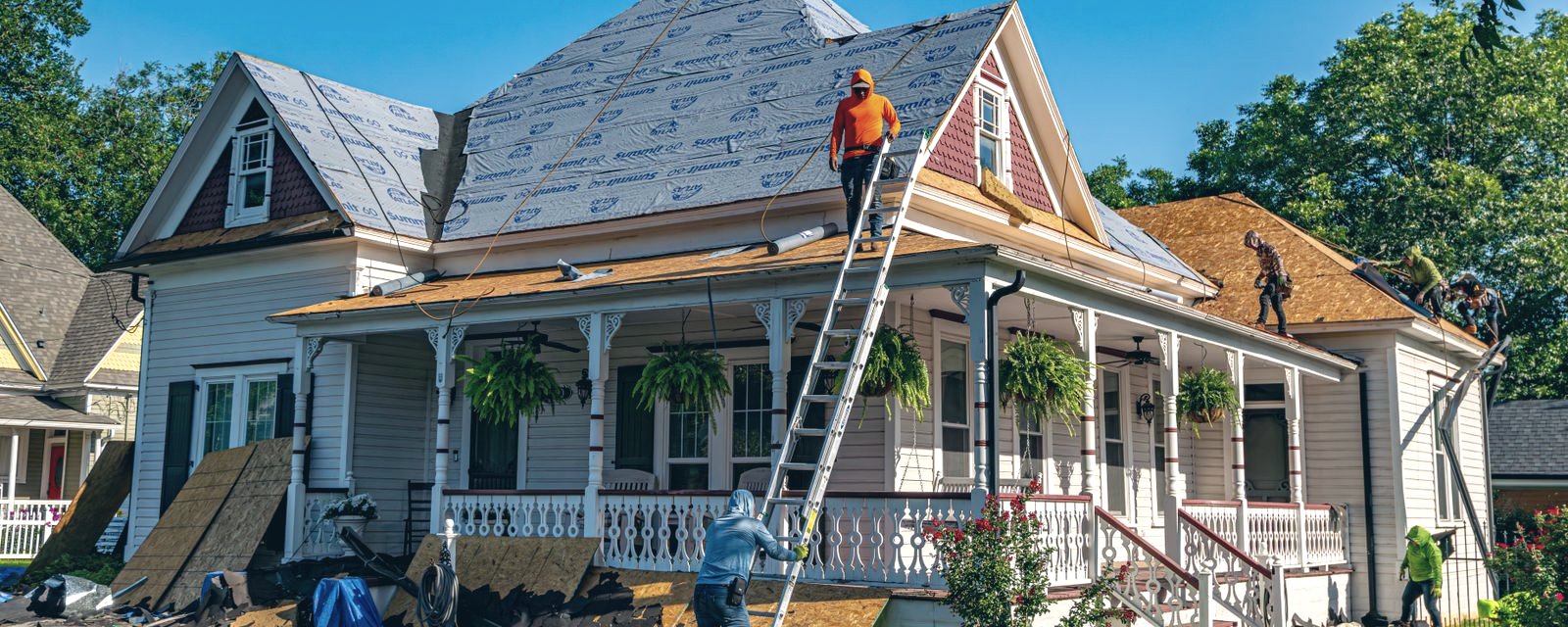
Faster than most people expect. A crew of six to eight strips and reshingles a typical 24-square roof in one to two days. Complex or steep roofs run three. Metal takes longer — usually three to five days, sometimes a week on a big standing-seam job.
The calendar time is the wild card. Sign in spring hail season and you might wait two to six weeks for your slot, because every roofer from Douglasville to the Upstate is working the same storm map. The rhythm of the job itself: day one is the loud one, tear-off and dry-in by afternoon so the roof never sleeps exposed. Day two is shingles, ridge cap, flashing details, and the magnet sweep for nails in your yard. Ask for the magnet sweep by name — your car tires care.
Georgia and the Carolinas sit squarely in hail country, and a real share of the roofs replaced here every year are paid mostly by insurance, not out of pocket. If your roof took hail or straight-line wind in the last year or two, get a storm-savvy inspection before you self-fund anything — our hail damage guide shows what adjusters look for, and the insurance guide walks the claim process. One warning: filing a claim for plain old-age wear gets denied and stays on your record. Storm damage only.
How people actually pay for it
A roof is a five-figure surprise for most families, so here's the honest landscape. Insurance covers it when a storm did the damage — that's the first door to check, per above. Cash or HELOC beats roofer-arranged financing on rate almost every time; the 12-months-same-as-cash offers are fine if you truly pay inside the window and ugly if you don't. And to save you a search: the federal 25C tax credit expired for installs after December 31, 2025, and standard shingle roofs never qualified anyway. There's no tax angle on a 2026 reroof. Budget the real number.
One more way to think about the timing: a roof at year 20 that's leaking has already made the decision for you, but a roof at year 16 with one bad flashing point might just need a $600 repair. Our roof lifespan guide helps you figure out which side of that line you're on before you commit to the big bill.