 CostBeaver
Furnace Repair: What's Actually Wrong, and What It Costs to Fix
Most furnace repairs land at $150–$650 — a bad ignitor, a dirty flame sensor, or a tripped limit switch. Bigger failures like a blower motor, gas valve, or control board push $450–$2,000. Before you call anyone, check three things yourself: the breaker, the thermostat batteries, and the filter. Those solve more "dead furnace" calls than any part on a technician's truck. One failure ends the debate on the spot — a cracked heat exchanger is a safety issue, not a repair line item, and it usually means replace, not fix.
The short version
- Most furnace repairs run $150–$650 — ignitors, flame sensors, and limit switches are the usual suspects. Blower motors and control boards run $450–$2,000.
- Before calling anyone, check the breaker, the thermostat batteries, and the filter. A clogged filter alone causes short-cycling that mimics a much scarier problem.
- A cracked heat exchanger is not a repair — it's a carbon-monoxide risk, and a tech who's worth trusting will refuse to patch it. That's a replacement conversation.
- Nights, weekends, and the first cold snap of the season all carry $150–$300 emergency service fees on top of the repair. Booking a fall tune-up avoids most of that.
What furnace repair actually costs in 2026
Here's what's actually landing on invoices across Georgia and the Carolinas this year, from a Snellville service call to a Fort Mill townhouse:
| Symptom | Likely cause | Typical 2026 repair cost |
|---|---|---|
| Furnace won't start at all | Tripped breaker, dead thermostat batteries, blown control fuse | $150–$300 |
| Blows cold air, then shuts off | Dirty flame sensor or failing ignitor | $150–$400 |
| Short-cycles on and off | Clogged filter, bad limit switch, or an oversized unit | $150–$500 (filter/switch) up to $2,000+ (resize) |
| Blower runs nonstop, no heat | Bad limit switch or a wiring fault | $250–$450 |
| Loud bang on startup | Delayed ignition — dirty burners or low gas pressure | $200–$450 |
| Squeal or rattle while running | Worn blower motor bearing or a loose belt | $250–$600 |
| No heat, control board is dead | Fried circuit board, often after a power surge | $400–$800 |
| Gas smell near the unit | Leak at a fitting or valve — not a DIY job | Emergency call, price varies |
Add $75–$150 for a standard diagnostic visit, or $150–$300 if it's after hours, a weekend, or the first freezing night of the year and every crew in town just got the same call you did.
Check these three things before you call anyone
Half the "furnace is dead" calls we hear about turn out to be one of these:
- The breaker. Furnaces trip breakers more than people expect, especially after a storm. Check the panel before you check anything else.
- Thermostat batteries. A thermostat that goes dark or stops responding is usually two AA batteries away from working again. Costs less than a candy bar.
- The filter. A filter you can't see light through starves the system of airflow, and a starved furnace will short-cycle, overheat, and trip its own safety switch — which looks exactly like a broken furnace. Our filter guide covers sizing and how often to actually change one.
None of these require a truck roll. All three get blamed on "the furnace" more often than the furnace itself is actually at fault.
A gas odor near the furnace is not a repair item you diagnose yourself. Leave the house, don't flip any switches on the way out, and call your gas utility's emergency line — Atlanta Gas Light, Piedmont Natural Gas, or Dominion Energy all run 24-hour lines for exactly this. Call from outside. This is the one furnace problem where "wait and see" is the wrong move.
The failures behind most service calls
Ignitors and flame sensors are the two most-replaced parts in a Southern furnace, mostly because they're cheap, small, and sit right in the path of the flame every single cycle. An ignitor that's cracked or a flame sensor coated in a thin layer of carbon both produce the same symptom — the furnace tries to light, fails, and shuts itself down as a safety measure. $150–$400 fixes either one.
Blower motors run for hours a day all winter, and the bearings eventually wear out. You'll hear it before you see it — a squeal that gets worse, then a rattle, then nothing. Replacement runs $450–$1,200 depending on whether it's a standard PSC motor or a variable-speed ECM, which most furnaces built after 2015 use.
Gas valves and control boards fail less often but cost more when they do — $300–$800. A board is especially prone to dying after a lightning storm knocks out power and it comes back with a spike, which is common enough in Georgia and the Carolinas that a whole-house surge protector is cheap insurance.
Cracked heat exchangers are different from everything above. That's the metal wall between the flame and the air blowing into your bedrooms, and a crack can let combustion byproducts, including carbon monoxide, into that airstream. No tech worth hiring will patch one. They'll tell you to replace the unit, and they're right.
The point where repair stops making sense
Age is the first filter. A furnace in Georgia or the Carolinas typically runs 15–20 years, helped by a heating season that's only about ten weeks long most winters. Under age 12 with a fixable fault, repair it and move on.
Past age 12, use the rule installers actually use: take $5,000, subtract $500 for every year of the furnace's age, and if the repair estimate beats what's left, the smarter money goes toward a new system instead. A $1,200 blower motor repair on a 14-year-old furnace fails that math — you'd be putting real money into a unit with maybe two or three winters left in it. Our repair-vs-replace guide walks through the borderline cases, and furnace replacement cost has the full 2026 pricing if you land on "replace."
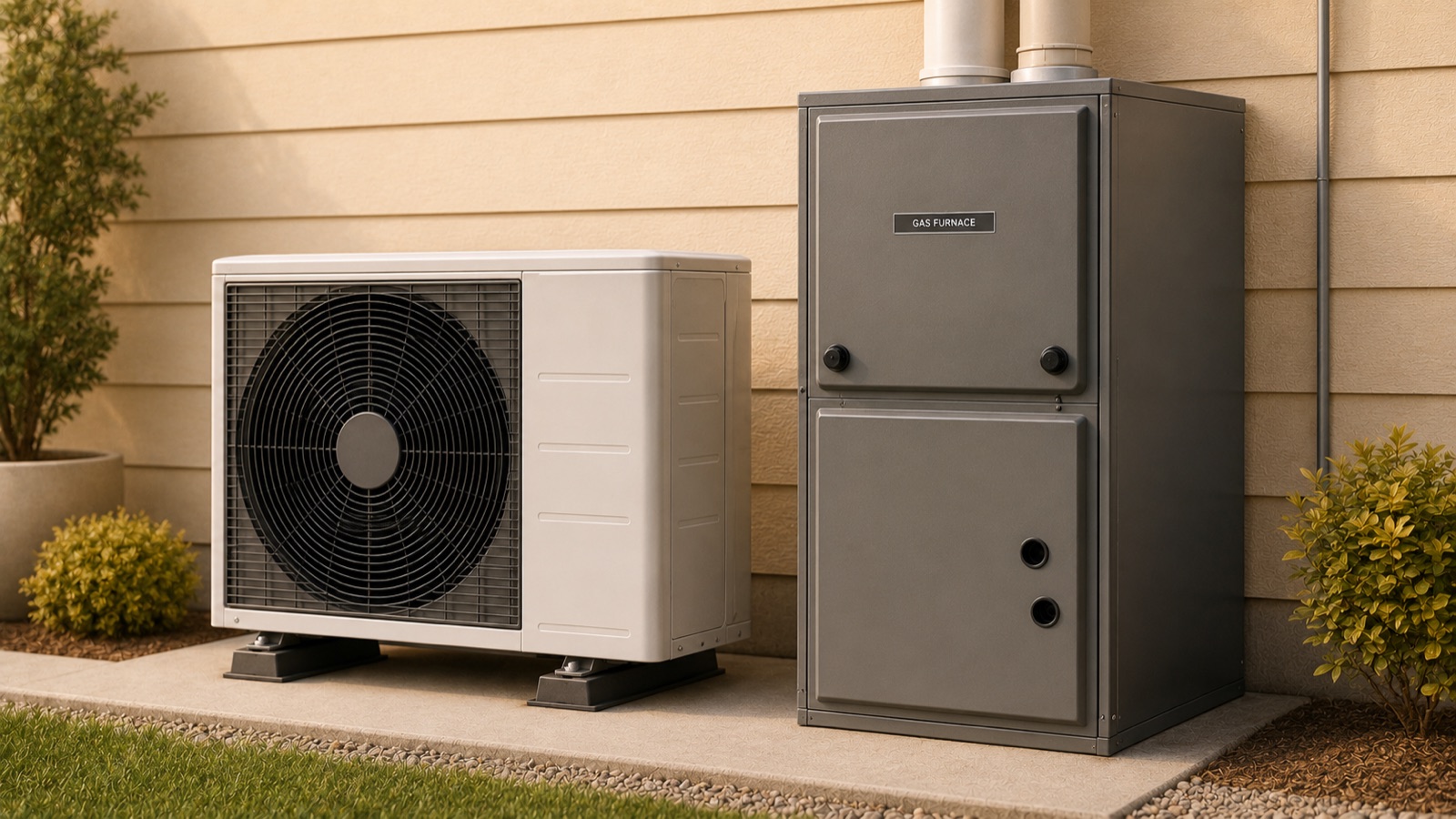
And if the furnace is old enough that this math is close, it's worth pricing a heat pump alongside a straight furnace swap — our winters are mild enough that one system often beats buying two. The full comparison is here.
Every HVAC schedule in metro Atlanta, Charlotte, and Columbia fills up the same week the temperature first drops into the 30s, and that's exactly when emergency fees kick in. A $100–$200 fall tune-up catches most of the failures on this page before they strand you on a Tuesday night. Our maintenance checklist covers what that visit should include.